

How to Prep Your Dade City Plumbing for Florida Storm Season
In Dade City, the question is never whether the big storms come. It is whether your house is ready when they do. Hurricane season runs June through November, and the daily afternoon downpours start even earlier than that.
Most of the storm related plumbing damage we see across Pasco County was preventable with an hour or two of prep. Here is what to check around your home before the radar lights up, and what to leave to a plumber before the season gets busy. None of it is complicated, and most of it costs nothing but an hour of attention.
How do you prepare your plumbing for storm season in Dade City, FL?
Clear your gutters, downspouts, and yard drains, get slow drains fixed before the rain arrives, find and test your main water shutoff, and secure your water heater. If your home has a septic system, plan for saturated ground. An hour of prep beats a flooded weekend every single time.
Storms do not usually break healthy plumbing. What they do is overwhelm systems that were already struggling. The drain that runs a little slow in April becomes the drain that backs up in August, when the ground is soaked and the rain will not quit.
Clear the paths water is supposed to take
Start outside. Clean the gutters, make sure downspouts push water several feet away from the foundation, and pull leaves and debris out of any yard drains or swales. Dade City storms can drop several inches of rain in an afternoon, and all of that water needs somewhere to go that is not your slab or your crawl space. While you are up there, confirm the downspout elbows and extensions are still attached, because they are always the first pieces to wander off.
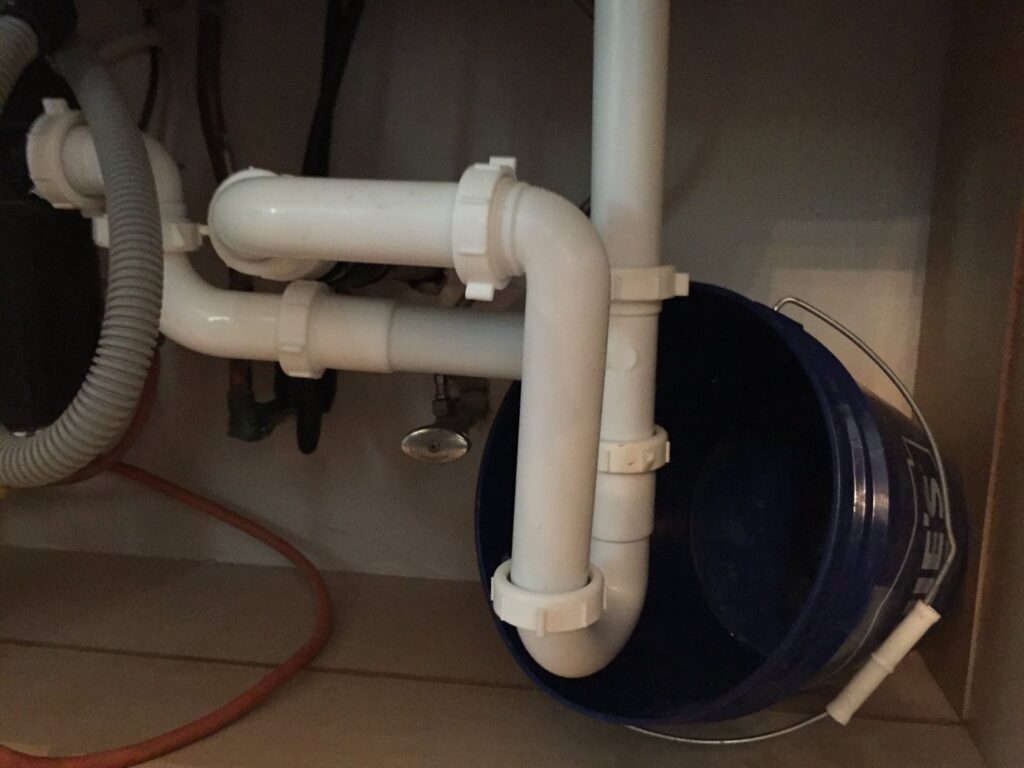
Inside, pay attention to any drain that gurgles or empties slowly. A partial clog plus a saturated yard is exactly how sewage backups happen during storm week. Getting a sluggish drain cleaned in May is a routine appointment. Getting it cleared during a tropical storm is an emergency call, and you will not be the only one making it.
Know your shutoff and check the weak links
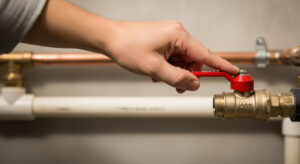
Every adult in the house should know where the main water shutoff is and how to use it. In most Pasco County homes it is near the water meter at the street or on the supply line where it enters the house. Test it now, because a valve that has not turned in fifteen years has a habit of refusing to turn when a pipe bursts.
While you are at it, look over the small stuff: supply lines to toilets and the washing machine, corrosion on visible fittings, and hose bibs outside. If you evacuate for a storm, shutting off the main is cheap insurance. A pinhole leak that sprays for three unattended days does more damage than most storms manage on their own. Label the valve while you are at it so a neighbor or house sitter can find it fast if you are out of town.
Protect your water heater from surges and floodwater
Power flickers and surges are hard on water heaters, especially the electronics on newer models. If a storm is bearing down and you plan to leave, turning off the breaker to an electric water heater is a smart move. It protects the elements if the tank ends up in a low water situation and shields the controls from surge damage.
If floodwater ever reaches your water heater, do not simply fire it back up when the water recedes. Soaked gas valves, burners, insulation, and electrical components can fail dangerously later even if the unit seems to run fine. Have it inspected first. The same goes for outdoor tankless units that took debris or standing water during a storm.
Septic systems, sewers, and saturated ground
Much of the area around Dade City sits on a high water table, and after a major storm the ground can stay saturated for days. If you are on septic, that means your drain field may temporarily have nowhere to send water. Ease up on laundry and long showers for a few days after heavy rain so you are not pushing the system while it is underwater.
Homes on municipal sewer are not off the hook either. Overloaded lines can push flow backward into the lowest drains in the house. If your neighborhood has a history of backups, ask us about a backwater valve, which is a one way check that keeps the street’s problems from becoming your bathroom’s problem. It is a modest project in most homes, and it pays for itself the first time the neighborhood system surcharges.
Bottom Line
Storm prep for your plumbing comes down to clear drainage, a shutoff you can trust, a protected water heater, and a plan for saturated ground. Handle those before the season peaks and your house can shrug off most of what a Florida summer throws at it. Massey Plumbing serves Dade City and all of Pasco County year round, storms included. If a drain is slow or a valve will not budge, get it on the schedule now, because the week a storm gets a name is the busiest week of our year.


